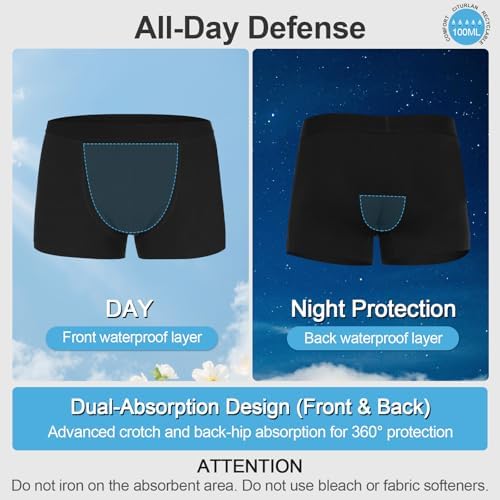
Almost every brand in this category sells by absorbency, and almost none of them explain what the numbers mean. "Maximum protection" tells you nothing. Millilitres are honest, but only if you can picture them.
What the numbers look like in real life
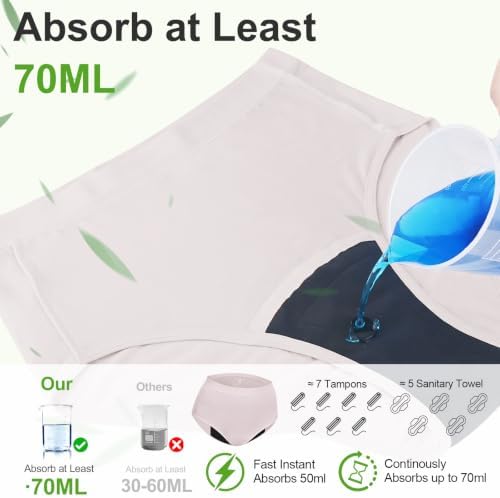
70 ml is about two tablespoons. That covers the kind of leak that happens when you cough, sneeze, laugh hard, or break into a run for the bus — a small amount, released suddenly. If your leaks are occasional and you mostly notice them during a specific movement, this is your level.
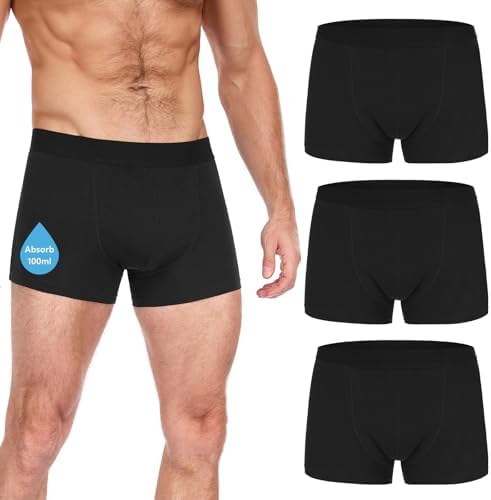
100 ml is about a third of a cup. This is the level most people land on. It handles several small leaks across a working day, or one larger one, without you needing to think about changing. If you are currently using a thin pad and topping it up during the day, 100 ml is usually the equivalent.
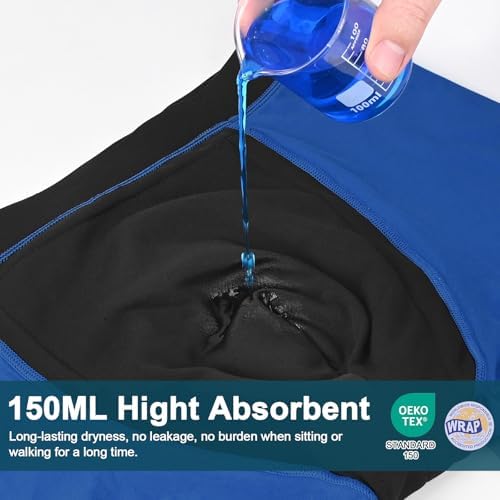
150 ml is about two thirds of a cup. This is for overnight, long flights and drives, and days where a bathroom is not guaranteed. It is also the sensible starting point if you are recovering from surgery and do not yet know what your pattern looks like.
A quick way to work it out
Rather than guessing, look at what you already do:
- If you use a panty liner and change it once a day, start at 70 ml.
- If you use a pad and change it once or twice a day, start at 100 ml.
- If you use a pad and change it more than twice, or you wear protection to sleep, start at 150 ml.
If you are between two levels, go up. The higher absorbency styles in our range are not noticeably thicker — the core is denser rather than bulkier — so sizing up in protection costs you very little in comfort.
The mistake worth avoiding
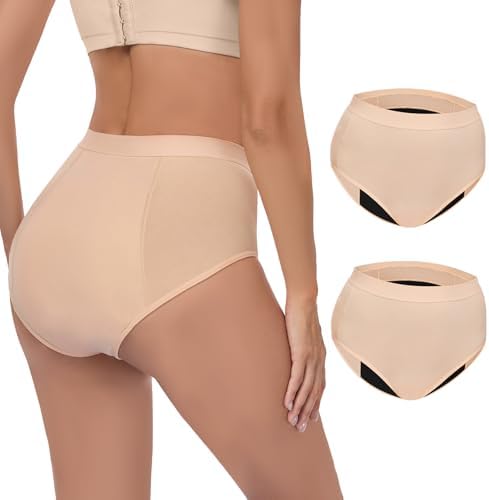
People routinely buy one pair to "test" and then judge the whole category on it. The problem is that a single pair tells you about absorbency but nothing about rotation. Leakproof underwear works best when you own enough to wear one, wash one and have one spare — otherwise you end up doing laundry every night and going back to disposables out of sheer inconvenience.
Three pairs is the realistic minimum. Five is comfortable, especially if you are wearing them overnight as well as during the day.
Fit matters as much as absorbency
A high-capacity core cannot help you if liquid escapes at the leg openings before it reaches the core. The garment has to sit flat against the skin all the way around. Too tight and the waistband gaps when you sit down; too loose and the edges lift.
Order your usual underwear size, and if you are between sizes take the larger one — the fabric has enough stretch that a slightly bigger pair still sits close. Full measurements are on the size guide.
Where to start
If you genuinely do not know, start at Moderate (100 ml). It is the level most people settle on, and it is far easier to judge from there whether you need more or less.
Casi todas las marcas de esta categoría venden por nivel de absorción, y casi ninguna explica qué significan las cifras. «Máxima protección» no dice nada. Los mililitros son honestos, pero solo si puedes imaginarlos.
Qué significan las cifras en la vida real
70 ml son unas dos cucharadas. Cubre el tipo de pérdida que ocurre al toser, estornudar, reírte con ganas o echar a correr para alcanzar el autobús: poca cantidad, liberada de golpe. Si tus pérdidas son ocasionales y las notas sobre todo con un movimiento concreto, este es tu nivel.
100 ml es aproximadamente un tercio de taza. Es el nivel en el que acaba la mayoría. Gestiona varias pérdidas pequeñas a lo largo de una jornada laboral, o una más abundante, sin que tengas que pensar en cambiarte. Si ahora usas una compresa fina y la refuerzas durante el día, 100 ml suele ser el equivalente.
150 ml son unos dos tercios de taza. Es para la noche, vuelos y trayectos largos, y días en los que no hay un baño garantizado. También es el punto de partida sensato si te estás recuperando de una cirugía y todavía no sabes cuál es tu patrón.
Una forma rápida de averiguarlo
En lugar de adivinar, fíjate en lo que ya haces:
- Si usas un protegeslip y lo cambias una vez al día, empieza por 70 ml.
- Si usas una compresa y la cambias una o dos veces al día, empieza por 100 ml.
- Si la cambias más de dos veces, o llevas protección para dormir, empieza por 150 ml.
Si estás entre dos niveles, sube. Los modelos de mayor absorción de nuestra gama no son perceptiblemente más gruesos —el núcleo es más denso, no más voluminoso—, así que subir de protección te cuesta muy poco en comodidad.
El error que conviene evitar
Es habitual comprar un solo par «para probar» y juzgar toda la categoría a partir de ahí. El problema es que un único par te dice algo sobre la absorción, pero nada sobre la rotación. La ropa interior antifugas funciona mejor cuando tienes suficientes para llevar una puesta, lavar otra y guardar una de repuesto; si no, acabas lavando cada noche y volviendo a los desechables por pura incomodidad.
Tres pares es el mínimo realista. Cinco es cómodo, sobre todo si también las llevas por la noche.
El ajuste importa tanto como la absorción
Un núcleo de alta capacidad no sirve de nada si el líquido se escapa por las aberturas de las piernas antes de llegar a él. La prenda tiene que quedar lisa contra la piel en todo el contorno. Demasiado ajustada, la cintura se separa al sentarte; demasiado holgada, los bordes se levantan.
Pide tu talla habitual de ropa interior y, si estás entre dos, elige la mayor: el tejido tiene suficiente elasticidad para que un par algo más grande siga quedando ceñido. Todas las medidas están en la guía de tallas.
Por dónde empezar
Si de verdad no lo sabes, empieza por Moderada (100 ml). Es el nivel en el que acaba la mayoría, y desde ahí es mucho más fácil juzgar si necesitas más o menos.