Pregnancy and birth put months of sustained load on the pelvic floor — the sling of muscle that, among other jobs, helps keep the bladder closed. It is unsurprising that it takes time to recover, and leaking in the weeks and months afterwards is one of the most commonly reported postpartum symptoms there is.
It is also one of the least discussed, which leaves a lot of people assuming they are unusual. They are not.
What it usually looks like
The most common pattern after birth is stress incontinence: a small amount of urine escapes when pressure suddenly rises inside the abdomen. Coughing, sneezing, laughing, lifting a toddler, standing up quickly, or the first few weeks back at exercise are the usual triggers.
Some people also notice urgency — a sudden, hard-to-defer need to go. The two can occur together.
What tends to help
Pelvic floor training. This is the intervention with the strongest track record, and it is worth doing properly rather than casually. A pelvic health physiotherapist can check that you are activating the right muscles, which is the part people most often get wrong on their own — squeezing the glutes or holding the breath instead. In many countries you can self-refer.
Time. A great deal of postpartum leaking improves over the first several months as tissue heals and strength returns. That is not a reason to ignore it, but it is a reason not to panic in week three.
Not managing it with dehydration. Drinking less is a tempting shortcut and it backfires: concentrated urine irritates the bladder and tends to make urgency worse.
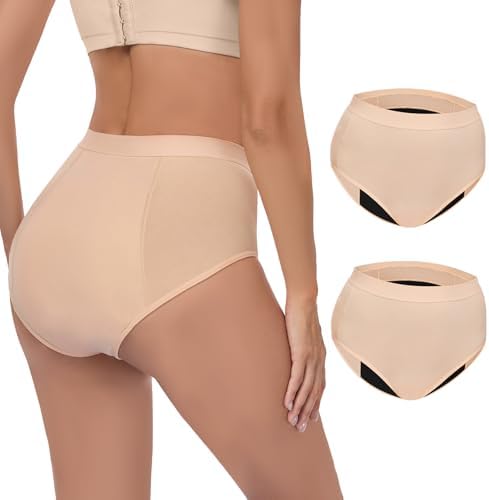
Something reliable to wear meanwhile. Recovery takes as long as it takes, and in the meantime the practical problem is simply not wanting to think about it while you are already short of sleep and attention.
Why reusable underwear suits this period specifically
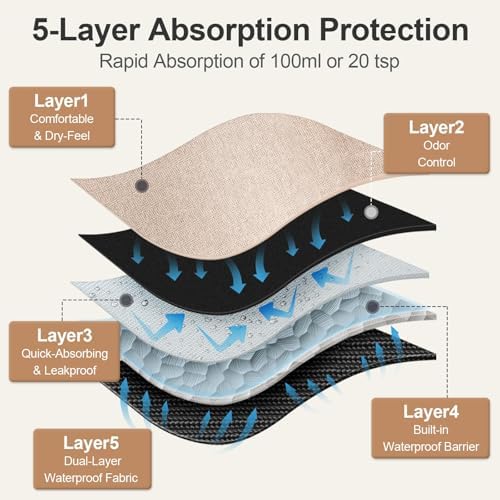
Postpartum is a phase, not a permanent state, and the volume tends to fall over time. Disposables cost the same every week regardless. Reusable pairs let you start at a higher absorbency and drop down as things improve, without buying a different product each time.
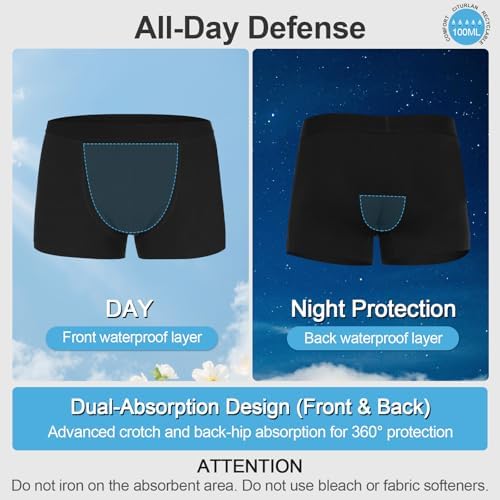
There is also the practical matter of laundry you are already doing. Leakproof underwear goes in with the normal wash — it does not need separate handling, and it does not need a bin in the bathroom that someone might look into.
Most people in this phase start with Moderate (100 ml) and move to Light (70 ml) as leaks become less frequent.
When to ask for help rather than wait
Speak to your doctor or midwife rather than waiting it out if:
- leaking has not improved at all by around three months postpartum
- you are leaking stool as well as urine
- you feel heaviness, dragging or a bulge in the vagina
- it hurts to pee, you have a fever, or you see blood
- you cannot empty your bladder properly
None of these mean something is badly wrong, but all of them are worth a proper assessment rather than guesswork — and several have straightforward treatments that work much better when started early.
El embarazo y el parto someten al suelo pélvico —la banda muscular que, entre otras funciones, ayuda a mantener la vejiga cerrada— a meses de carga sostenida. No sorprende que tarde en recuperarse, y perder orina en las semanas y meses siguientes es uno de los síntomas posparto más frecuentes que existen.
También es uno de los que menos se hablan, lo que hace que muchas personas crean que su caso es raro. No lo es.
Cómo suele manifestarse
El patrón más común tras el parto es la incontinencia de esfuerzo: se escapa una pequeña cantidad de orina cuando la presión dentro del abdomen sube de golpe. Toser, estornudar, reír, levantar a un niño pequeño, incorporarte deprisa o las primeras semanas de vuelta al ejercicio son los desencadenantes habituales.
Algunas personas notan además urgencia: una necesidad repentina y difícil de aplazar. Ambas cosas pueden darse a la vez.
Qué suele ayudar
Entrenar el suelo pélvico. Es la intervención con mejor respaldo, y conviene hacerla bien y no de cualquier manera. Un fisioterapeuta de suelo pélvico puede comprobar que estás activando los músculos correctos, que es justo la parte que más se falla por cuenta propia: apretar los glúteos o aguantar la respiración en su lugar. En muchos países puedes pedir cita directamente.
Tiempo. Buena parte de las pérdidas posparto mejora durante los primeros meses, a medida que el tejido cicatriza y vuelve la fuerza. No es motivo para ignorarlo, pero sí para no alarmarse en la tercera semana.
No gestionarlo bebiendo menos. Es un atajo tentador y contraproducente: la orina concentrada irrita la vejiga y suele empeorar la urgencia.
Algo fiable que ponerte mientras tanto. La recuperación tarda lo que tarda, y entre tanto el problema práctico es simplemente no querer pensar en ello cuando ya te faltan sueño y atención.
Por qué la ropa interior reutilizable encaja bien en esta etapa
El posparto es una fase, no un estado permanente, y el volumen tiende a bajar con el tiempo. Los desechables cuestan lo mismo cada semana pase lo que pase. Los pares reutilizables te permiten empezar con más absorción e ir bajando a medida que mejoras, sin comprar un producto distinto cada vez.
Está además la cuestión práctica de la colada que ya estás haciendo. La ropa interior antifugas va con el lavado normal: no necesita un tratamiento aparte ni un cubo en el baño en el que alguien pueda mirar.
La mayoría en esta etapa empieza con Moderada (100 ml) y pasa a Ligera (70 ml) cuando las pérdidas se espacian.
Cuándo pedir ayuda en lugar de esperar
Habla con tu médico o matrona en lugar de dejar pasar el tiempo si:
- las pérdidas no han mejorado nada hacia los tres meses posparto
- también se te escapan heces, no solo orina
- notas pesadez, arrastre o un bulto en la vagina
- te duele al orinar, tienes fiebre o ves sangre
- no consigues vaciar bien la vejiga
Nada de esto significa que algo vaya muy mal, pero todo ello merece una valoración adecuada en lugar de conjeturas, y varias de estas situaciones tienen tratamientos sencillos que funcionan mucho mejor si se empiezan pronto.